Past Entries
Treasures of the Sea or Destroyers of the Sea?
submitted by Zejtun St Thomas More Secondary School : Krista Gatt for 11-14
campaign: YRE Entry
dissemination(s): school magazine,website,other,School monitor in the reception area
filed under Photos Reporting photo
As time goes by, harbours require maintenance. One such activity involves the dredging of the seabed (the removal of unwanted sediment). Unfortunately, a large percentage of the seabed present within commercial harbours ends up accumulating various items. Most of these include material derived from the loading and unloading of cargo such as steel, rubber pipes and lost cargo. Tyres, which are usually used as fenders, also from time to time end up on the seabed. Sadly, not only visible materials are dredged. The upper layer of the seabed is also contaminated with toxic substances from paint, oil and other chemicals. The attached photo shows materials mentioned above, which were dredged from the Grand Harbour of Valletta in October 2017. In this particular operation, the total amount of steel collected reached 1.8 tons!
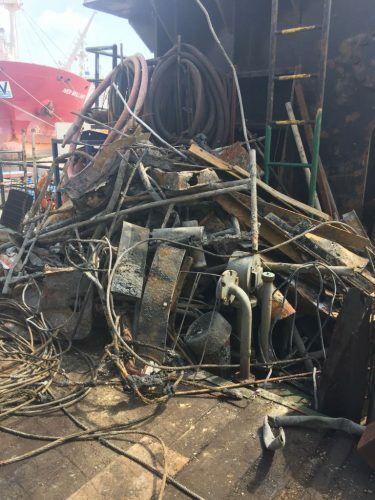
One man’s waste… another man’s treasure
submitted by St. Thomas More Secondary School Zejtun : Marija Camilleri for 11-14
campaign: YRE Entry
dissemination(s): other, School monitor in the reception area, school magazine, website
filed under Photos Reporting photo
awarded: 1st place Litter less Campaign
Modern societies have adopted a throw-away culture. In Europe, in 2015, each person has generated an average of 477kg of municipal waste. In Malta alone, each person generates more than 600kg of waste yearly. Environmental awareness has helped for disposing of our waste wisely by reusing and recycling paper, metal, plastic and glass. However, we are still wasting resources as we are throwing away organic matter generated in our households through food scraps, vegetable waste, tea bags, dead leaves and twigs. Nature shows us clearly that one man’s waste can be another’s treasure. Instead of filling our landfills with organic waste, we can give nature the opportunity to do its job and break it down into compost. Compost can then be used to enrich soil with the nutrients it needs.

Gate way to heaven, but is it really heaven?
submitted by St. Thomas More Secondary School Zejtun : Shaznay Borg for 11-14
campaign: YRE Entry
dissemination(s): school magazine,website,other,School reception monitor
filed under Photos Reporting photo
This photo portrays two different scenarios. There is a path leading to the sea but the path is littered with garbage. There is a very high probability that the garbage will end up in the sea. Consequently fish as well as other organisms may ingest the garbage. A number of harmful substances consumed by the said organisms may find their way up the food chain in a process known as bioaccumulation. Thus this brings up another question: “What are we really selling, buying and eating?” The photo only shows a fraction of marine litter but research suggests that about 12.7 million tonnes of plastic have accumulated in the world’s oceans as stated by an article in 2010. This is quite alarming considering that only 1% of the Earth’s water is suitable for drinking.

Let us save our Oceans.
submitted by St. Nicholas College Middle School Rabat : Victoria Magro, Kady Galea, Matteo Stagno, Jake Camilleri for 11-14
campaign: YRE Entry
dissemination(s): school media,other,Whole school assembly, Featured in the Action Planet exhibition at St James Cavalier, Presented to other schools during the Global Week
filed under Campaigning video Video Clips
The video was created using the simple technique of stop motion where around 160 photos were taken. The aim of the video is to create an original fun, simple yet innovative way to convey a very important message: that we are all responsible and that we all can make a difference. Living on an Island makes this topic even more valid. The video clearly shows what the problems caused by Ocean litter are and gives simple ways how to minimize the damage and engage in more sustainable practices.
A Fairy Tale Solution
submitted by individual : Elisa Demanuele for 7-10
campaign: YRE Entry
dissemination(s): newspaper,other,Social media Facebook
filed under Photos Reporting photo
Old tyres, imagination and a good will resulted in an attractive planter and waste reduction. A street with such planters makes you feel like Alice in Wonderland.

Worried about Mount Dirt?
submitted by St Clare's College Pembroke Secondary : Vladislav Bulibash for 11-14
campaign: YRE Entry
dissemination(s): other,social media
filed under Photos Reporting photo
The silhouette in this photo is very worried seeing that there is mount dirt. We need to take care of the environment.
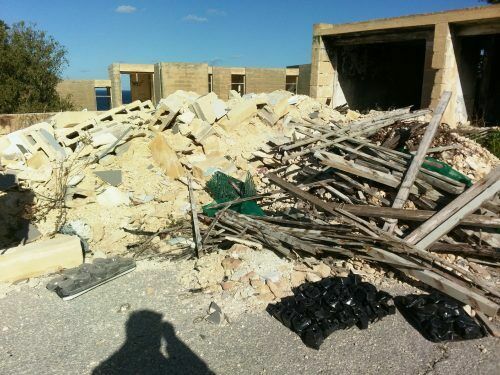
Nature’s Reading?
submitted by St Clare's College Pembroke Secondary : Vladislav Bulibash for 11-14
campaign: YRE Entry
dissemination(s): other,social media
filed under Photos Reporting photo
We should dispose of our rubbish correctly. Magazines can be reused by giving them to other people to read or recycling them.

21st century emergent ‘trees’
submitted by Gozo College Middle School : Mara Spiteri for 11-14
campaign: YRE Entry
dissemination(s): school magazine,website,school media,other,EkoSkola Noticeboard, EkoSkola blog
filed under Photos Reporting photo
Malta’s dependency on tourism, economic progress and population growth is putting extra pressure on the Maltese Islands’ surface area. Construction seems to have become Malta’s main source of income. The solution developers are providing for the ever increasing demand for accommodation is concrete high rise buildings. Urban sprawl is categorically affecting the balance between rural and built-up areas with a great loss of the local identity. Urban skylines are being swamped with haphazard development without any real concern on the effects on the surrounding area and environment. These emerging ‘trees’ are literally suffocating the traditional low buildings built in local stone. How sustainable is all this?
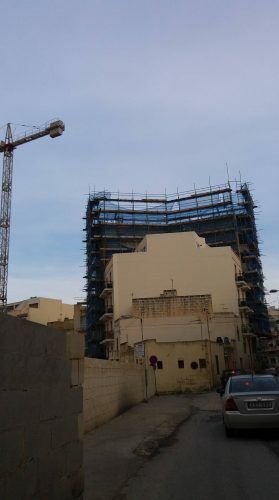
Never ending sunset- Light Pollution
submitted by Mcast Art & Design Mosta : Luke Zerafa for 19-25
campaign: YRE Entry
dissemination(s): newspaper, school magazine, school media, website
filed under Photos Reporting photo
awarded: Best Entry, International Honorable Mention
Dangers of Light Pollution: Nature: animals confuse artificial lighting for moon and disrupt their natural cycles Human: Circadian Rhythms- Controlled by ‘Ganglion cells’ found inside the eye, controlling the sleep/ wake/ eat cycle + Behavioural functions + pupillary light reflex (dilation of the pupil)- how much light enters the eye and how much we perceive. Ganglion cells have a peak absorption rate of around 480 nM wavelength (blue light) In short: Wrong colour temperature bluish light pollution has greater effect on our sleep/ wake/ eat cycles (circadian) + Behaviour functions Installing too powerful lighting instead of finding the proper low wattage to produce an adequate amount of luminosity results in light pollution from the reflected surface just under the light source. Waste of electricity to light unused spaces.

Walk-through landfill
submitted by Gozo College Middle School : EkoSkola Committee for 11-14
campaign: YRE Entry
dissemination(s): EkoSkola blog, Ekoskola noticeboard, other, school magazine, school media, website
filed under Articles
Want the experience? Just go to Xlendi. Yes, one of Gozo’s prime tourists’ sites is changing into a walk-through landfill. Bring in sites have been burnt. Open garbage bags with waste spread all over, bulky waste on pavements are the rule of the day especially over weekends. Suggestions and possible solutions have been put forward by many, including young reporters since at least 2014. It was on the media and the relative authorities were also contacted back then. Unfortunately things not only did not improve but the situation has worsened over time. Back in 2014 bring-in sites had been ‘converted’ into open air dumping sites. Careless persons actually made them inaccessible by depositing mounds of garbage bags and rubbish at the base and all around the recycle containers. Numerous residents and young reporters included suggested that security cameras are installed to stop irresponsible dumping of non-recyclable waste but no cameras. The first step is to reduce waste, recycle all that is possible and be responsible that the items one has to throw away are disposed of in the right way and at the right place.
All the Articles
- 7-10
- 11-14
- 15-18
- 19-25
- Best Entry
- Participation
- 1st place Litter less Campaign
- 2nd place Litter less Campaign
- 3rd place Litter less campaign
- Honorable Mention
- YREstayshome
- 1st place international
- International Honorable Mention
- 2nd place international
- 3rd place international
- Shortlisted internationally
- Best Entry International Collaboration
- Best YREstayshome Award
- Sustainable Mobility Award
- Most active YREstayshome participant
- YREstayshome International Award
- New Category
- Disqualified
- Resisles
- Resisles Best Entry
- Resisles 2nd Place
- Resisles Commended
- Resisles 3rd Place
- Resisles Honorable Mention
- Commended
- Finalist
- HSBC Award
- NT-FEE Award
- WasteServ Award
- WER Award
All the Photos
- 7-10
- 11-14
- 15-18
- 19-25
- Best Entry
- Participation
- 1st place Litter less Campaign
- 2nd place Litter less Campaign
- 3rd place Litter less campaign
- Honorable Mention
- YREstayshome
- 1st place international
- International Honorable Mention
- 2nd place international
- 3rd place international
- Shortlisted internationally
- Best Entry International Collaboration
- Best YREstayshome Award
- Sustainable Mobility Award
- Most active YREstayshome participant
- YREstayshome International Award
- New Category
- Disqualified
- Resisles
- Resisles Best Entry
- Resisles 2nd Place
- Resisles Commended
- Resisles 3rd Place
- Resisles Honorable Mention
- Commended
- Finalist
- HSBC Award
- NT-FEE Award
- WasteServ Award
- WER Award
All the Video Clips
- 7-10
- 11-14
- 15-18
- 19-25
- Best Entry
- Participation
- 1st place Litter less Campaign
- 2nd place Litter less Campaign
- 3rd place Litter less campaign
- Honorable Mention
- YREstayshome
- 1st place international
- International Honorable Mention
- 2nd place international
- 3rd place international
- Shortlisted internationally
- Best Entry International Collaboration
- Best YREstayshome Award
- Sustainable Mobility Award
- Most active YREstayshome participant
- YREstayshome International Award
- New Category
- Disqualified
- Resisles
- Resisles Best Entry
- Resisles 2nd Place
- Resisles Commended
- Resisles 3rd Place
- Resisles Honorable Mention
- Commended
- Finalist
- HSBC Award
- NT-FEE Award
- WasteServ Award
- WER Award
All the Podcasts
- 7-10
- 11-14
- 15-18
- 19-25
- Best Entry
- Participation
- 1st place Litter less Campaign
- 2nd place Litter less Campaign
- 3rd place Litter less campaign
- Honorable Mention
- YREstayshome
- 1st place international
- International Honorable Mention
- 2nd place international
- 3rd place international
- Shortlisted internationally
- Best Entry International Collaboration
- Best YREstayshome Award
- Sustainable Mobility Award
- Most active YREstayshome participant
- YREstayshome International Award
- New Category
- Disqualified
- Resisles
- Resisles Best Entry
- Resisles 2nd Place
- Resisles Commended
- Resisles 3rd Place
- Resisles Honorable Mention
- Commended
- Finalist
- HSBC Award
- NT-FEE Award
- WasteServ Award
- WER Award


